
Blogs & Insights







Vlog: Real Wealth Real Estate


All Insights
Is the Toronto Condo Market Starting to Tighten? What May 2026 Data Tells Us
For much of the past two years, the Toronto condo market has been defined by one word: choice.
Buyers had options. Sellers had competition. Investors were cautious. End users were waiting. And many people sitting on the sidelines believed that time was on their side.
But the May 2026 data is starting to show a shift.
Why Toronto Condo Buyers Should Pay Attention to the Latest Market Report
The latest market data is starting to reveal a shift in Toronto real estate—and if you’re focused on condos, this is where the opportunity begins.
After a prolonged period of hesitation, we’re now seeing early signs of demand returning. Sales are increasing year-over-year, while new listings are declining. That combination matters.
Selling a Toronto Condo in 2026: Why Pricing Strategy Matters More Than Ever
The Toronto condo market in 2026 has shifted. This is no longer a market where you can list high, wait, and expect buyers to chase the price upward.
Today, pricing strategy is the strategy.
Why First-Time Buyers Are Still Entering the Market (Despite Affordability Challenges)
There’s a narrative in the media right now that affordability has pushed first-time buyers out of the Toronto market.
But when you step back and look at the data—and more importantly, the behavior on the ground—you see a very different story.
Why 2026 Could Be the Best Time in a Decade to Buy a Toronto Condo
If you’ve been watching the Toronto condo market over the past few years, you’ve seen the full cycle—rapid appreciation, peak pricing, rising rates, and now… a reset.
And here’s the opportunity most people miss:
the best investments are rarely made when the headlines feel comfortable.
2026 is shaping up to be one of those moments.
Toronto Condo Supply Is About to Collapse — Here’s the Data
Listings are high. Prices are soft. Buyers have leverage.
But that’s surface-level thinking.
When you step back and look at the development pipeline, a very different story emerges—one that every serious buyer, seller, and investor needs to understand:
Toronto isn’t heading toward oversupply. It’s heading toward a supply shock.
Why Toronto Condo Prices Are Back to 2019 Levels—and Why That Matters
There’s a narrative dominating the market right now: Toronto condos are down.
That’s true—but it’s incomplete.
What’s actually happening is far more important. The market hasn’t collapsed. It has reset. And in many segments, that reset has brought condo prices back to levels we haven’t seen since 2019.
For buyers and investors who understand cycles, this is where the opportunity begins.
Toronto Spring Real Estate Market 2026: A Market Quietly Shifting
If you’re only following headlines, it would be easy to assume that Toronto’s real estate market is still stuck in a slowdown. Prices are softer than previous years, and uncertainty has kept many buyers and sellers on the sidelines.
But when you look at the latest data, a different narrative is starting to emerge—one that experienced investors recognize immediately.
Why Toronto Real Estate Isn’t Crashing—It’s Resetting
For the past 18 months, the narrative has been loud and consistent: “Toronto real estate is crashing.”
But when you step away from headlines and look at the data, a very different story emerges.
How RE/MAX Wealth Builders Successfully Sold a Tenanted Condo in Toronto’s Wonder Condos
The condo had previously been listed with another agent and struggled to sell. The unit was tenanted, which limited showings and reduced buyer interest — a common challenge when selling downtown Toronto condos.
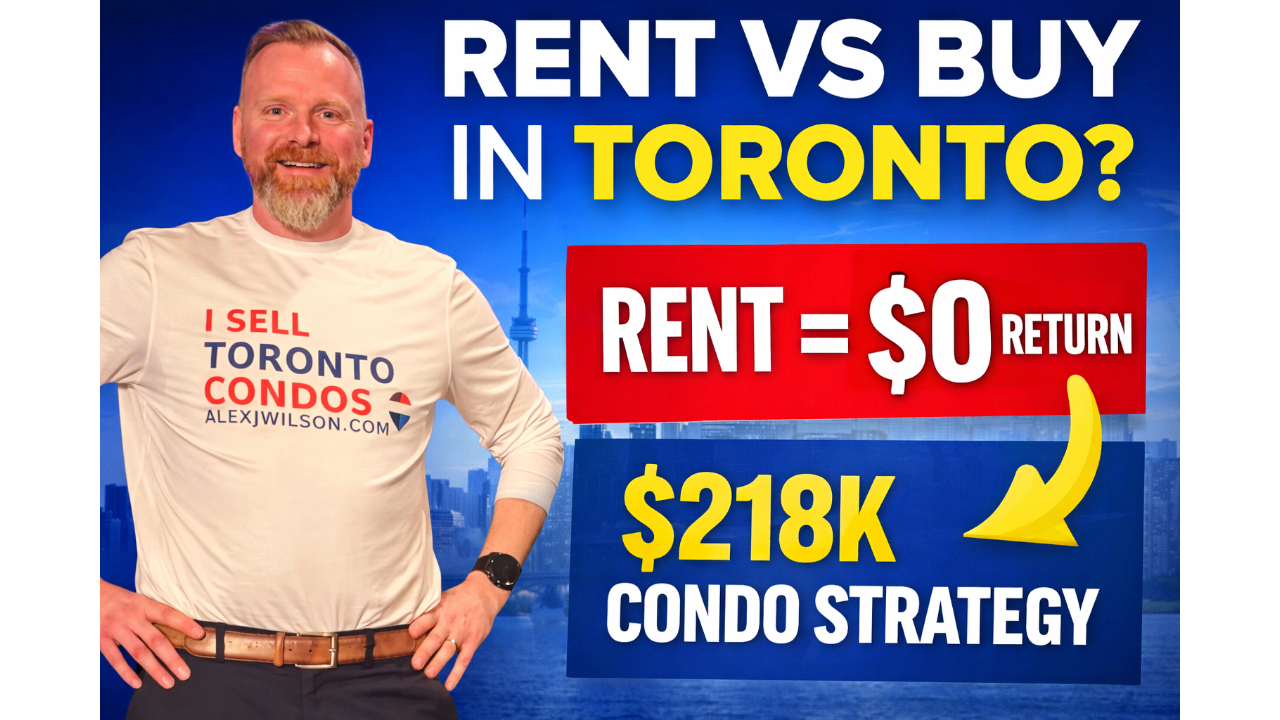
The Business Case: How To Convince Your Parents to Buy You A Condo
First-time buyers in Toronto: learn how buying a condo instead of renting could build over $200K in equity using a simple house-hacking strategy.
What First-Time Buyers Should Prioritize This Year (Toronto 2026 Guide)
For many first-time buyers in Toronto, the biggest question right now is simple: Is this the right time to buy?
The reality is that 2026 has created one of the most unique opportunities we’ve seen in years. Prices have softened, inventory has increased, and mortgage conditions have stabilized compared to the volatility of the past few years. The Greater Toronto Area benchmark home price is down about 8% year-over-year, and condo prices have fallen nearly 10% annually, giving buyers more negotiating power than they’ve had since before the pandemic boom.
Entering the Toronto Condo Market Has Never Been Better — But This Window Will Close
For years, Toronto real estate has been one of the most reliable wealth-building tools in Canada. But for many buyers — especially renters — the biggest barrier has always been affordability.
Ironically, the current condo market conditions have created one of the best entry opportunities we’ve seen in over a decade.
If you are currently renting a condo in Toronto, making a move into ownership today may be the single most important financial decision you make for your long-term future.
And the reason is simple: this opportunity is temporary.

Looking to Sell but There Are Tenants in Your Unit? A 2026 Guide for Toronto Condo Sellers
If you’re a Toronto condo owner thinking about selling in the current 2026 real estate market, having tenants in your unit can feel like a major obstacle. Between tenant rights, showing restrictions, buyer hesitation, and legal requirements, selling a tenanted condo is very different from selling a vacant property.

Everyone Thinks Toronto Condos Are Dead. The Data Says Otherwise.
It’s easy to jump to the conclusion that real estate is “broken.” But when you step back and look at the data — not the noise — a very different story appears. The condo market isn’t doomed. It’s simply between cycles. And for strategic investors, this is often where the best opportunities are created.

Toronto Condos Are Cash Flow Positive Again (Here’s The Math)
In this video, Alex J. Wilson breaks down the real numbers behind today’s Toronto Condo market and shows you exactly how smart investors are quietly building wealth again while others sit on the sidelines.
Toronto Real Estate Market: A Comprehensive 2026 Preview
The Toronto real estate market is a dynamic landscape, and as we look towards 2026, understanding its trends and projections is more crucial than ever. In this blog post, we will explore insights from a recent podcast featuring Alex Wilson, a seasoned real estate broker and investor, who shared his expertise on the current state and future of the Toronto real estate market.

How Back-to-Office Mandates Are Impacting the Toronto Real Estate Market
After years of remote work dominating the conversation, one thing is becoming clear: the return-to-office trend is quietly reshaping the Toronto real estate market — especially condos and rentals.

Mortgage Renewals in 2026: Smart Moves to Consider Early
2026 will be one of the largest mortgage renewal waves Canada has seen in years.
Thousands of owners who locked in ultra-low rates in 2020–2021 will be renewing into a very different interest rate environment.

How to Read Market Data Without Overreacting
Headlines are emotional. Data is rational.
And the people who build real wealth learn how to read the numbers without overreacting to the noise.
At Wealth Builders, we don’t make decisions based on fear or hype — we make them based on math.
Can a $25,000 investment turn into $5.5 million in Toronto real estate?
Using strategies like house hacking, triplex investing, and leveraging equity, Alex was able to grow his portfolio while generating rental income along the way.
This story highlights how first-time buyers can start small and build long-term wealth through real estate.